Youth Climate Action: Turning Global Commitments into Local Change!
“Climate Action begins when young people choose to turn concern into community impact.”
Youth Climate Action: Turning Global Commitments into Local Change!
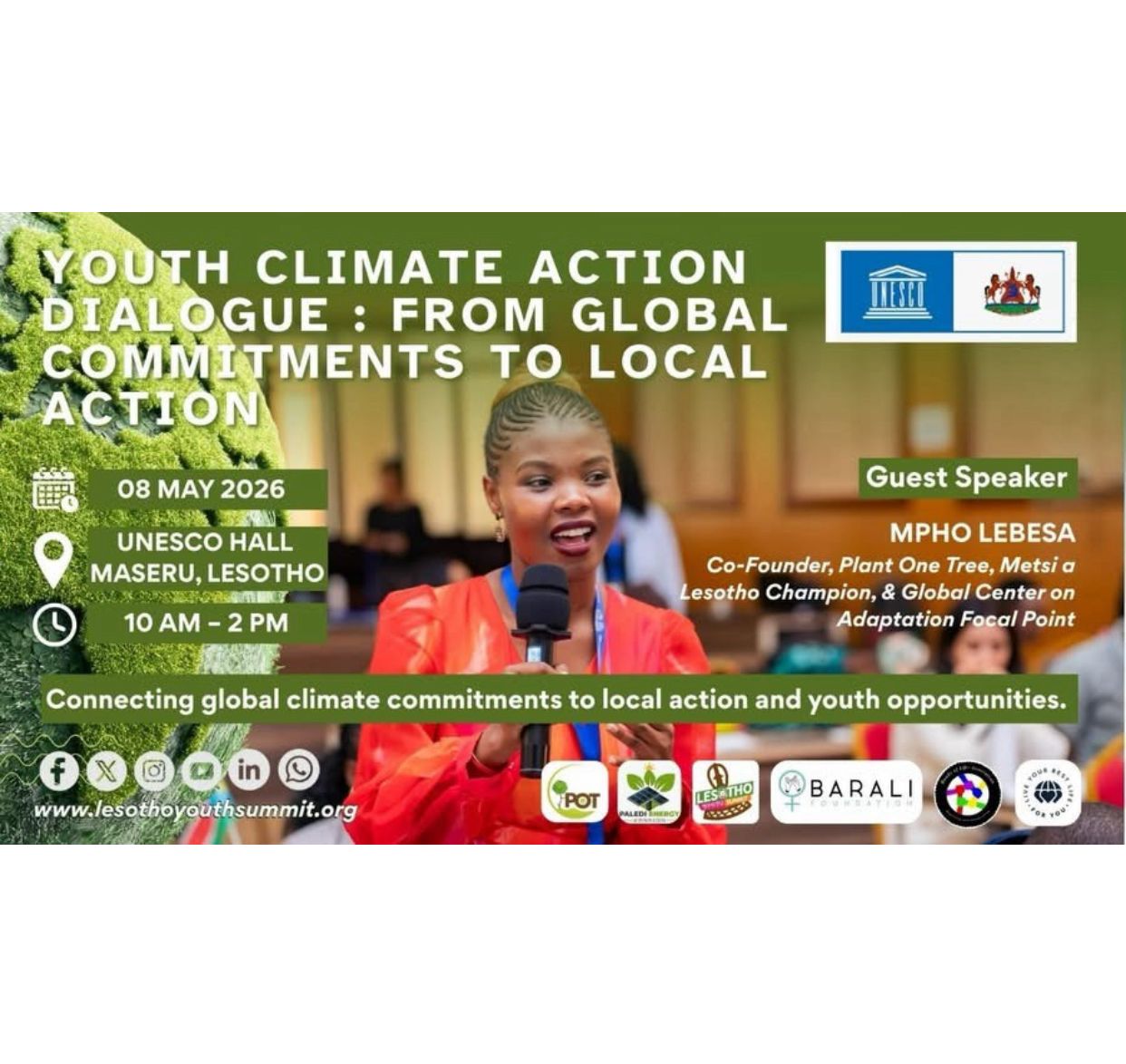
Young people across Lesotho are continuing to step into important conversations around climate action, sustainability, and community development. During the recent Youth Climate Action Dialogue held at UNESCO Hall in Maseru, youth leaders, advocates, and organisations gathered to discuss how global climate commitments can be transformed into meaningful local action.
One of the speakers who stood out during the dialogue was environmental advocate and youth leader, Mpho Priscilla Lebesa. Through her story, she reminded young people that climate advocacy is not only about policies and international conferences — it is also about communities, water, land, food security, and the everyday realities people face.
As a Metsi a Lesotho Champion, Co-Founding Director of Plant One Tree, and Global Center on Adaptation Focal Point, Mpho shared how her passion for environmental advocacy was inspired by the connection between Basotho communities and nature. She reflected on challenges such as water scarcity, soil erosion, and the growing effects of climate change on vulnerable communities.
Her message highlighted an important truth: climate change is no longer a distant issue. It is already affecting livelihoods, agriculture, health, and the future of young people.
During the discussion, she also spoke about one of the biggest barriers facing youth participation in environmental action — limited access to resources, mentorship, and platforms that allow young people to lead. Many young people are passionate about creating change but often feel unheard or excluded from decision-making spaces.
This conversation strongly reminded attendees that youth involvement in climate advocacy is necessary. Young people bring innovation, energy, creativity, and lived experiences that are essential in building sustainable communities. From starting local clean-up campaigns and tree-planting initiatives to raising awareness online and influencing policy discussions, youth have the power to shape the future.
Climate action also connects directly to several Sustainable Development Goals, including SDG 3 (Good Health and Well-being), SDG 6 (Clean Water and Sanitation), SDG 11 (Sustainable Cities and Communities), SDG 13 (Climate Action), and SDG 15 (Life on Land). Environmental issues are deeply connected to social and economic wellbeing, which is why collective action matters.
Another key point raised during the dialogue was the importance of balancing global climate expectations with local realities. Solutions that work in one country may not always work in another. Communities must be included in conversations, and local knowledge should be respected when designing climate strategies.
For students and first-time activists, the message was simple but powerful: start where you are. Join community initiatives, educate yourself, collaborate with others, and remain consistent. Change often begins with small actions that grow into larger movements over time.
The Youth Climate Action Dialogue served as an important reminder that climate leadership is not reserved for experts alone. Every young person has a role to play in protecting the environment and building a more sustainable future.
As conversations around climate justice continue globally, the voices of African youth — especially young Basotho Leaders — remain important in shaping solutions that are inclusive, people-centred, and community-driven.
To connect with Mpho Priscilla Lebesa and follow the impactful work she is doing, follow Plant One Tree on social media and connect with her on LinkedIn(Mpho Lebesa).
 Rotaract and Envirocare Club
 Maleah Foundation