A Movement for Unity, Climate Consciousness, and a Resilient Lesotho
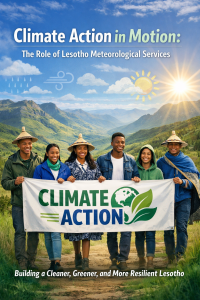
“Policy, data, and partnership — the pillars of climate governance in Lesotho.”
A Movement for Unity, Climate Consciousness, and a Resilient Lesotho
As part of our continued commitment to advancing climate awareness and strengthening partnerships, we had the opportunity to engage directly with Lesotho Meteorological Services (LMS) through an interview. This engagement provided deeper insight into the institution’s mandate, its Climate Change Unit, and the critical role it plays in supporting national resilience.
The discussion reaffirmed that climate action in Lesotho is grounded in data, policy, and coordinated national efforts — and that LMS remains central to guiding informed decision-making across sectors.
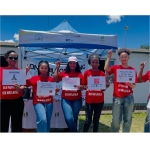
The Walk for Climate Action held in Maseru last year(2025) was more than a public event—it was a bold collective step for our planet. It symbolized unity, shared responsibility, and growing climate consciousness among Basotho from all walks of life. Government institutions, youth groups, civil society organizations, and development partners came together with one clear intention: to advocate for a cleaner, greener, and more resilient Lesotho.
At the heart of this movement was the understanding that climate action is not the responsibility of one institution alone. It is a shared journey that requires partnership, visibility, and sustained commitment. This spirit of collaboration reflects the essence of SDG 17: Partnerships for the Goals, where collective action strengthens national and community-level responses to climate change.
Lesotho Meteorological Services: Guiding Climate Resilience
Lesotho Meteorological Services (LMS) is the national meteorological agency of the Kingdom of Lesotho. Its mandate is to provide reliable weather and climate information that supports key sectors such as agriculture, transportation, public safety, environmental management, and national development.
Beyond daily forecasts, LMS plays a central role in coordinating national efforts to address climate change, support adaptation, and protect the ozone layer. Through climate data collection, analysis, and reporting, LMS informs policy decisions, strengthens disaster preparedness, and helps communities and institutions anticipate and respond to climate risks.
Within LMS, the Climate Change Unit leads national climate initiatives. The unit develops and updates climate policies, designs mitigation and adaptation strategies, builds technical capacity through education and training, and engages the public to reduce carbon emissions and strengthen resilience. This work positions LMS as a cornerstone of Lesotho’s climate governance architecture.
Advancing the Sustainable Development Goals Through Daily Action
For LMS, the Sustainable Development Goals are not abstract commitments—they guide daily operations and long-term planning. Every forecast, warning, and climate report contributes directly to national resilience and sustainable development.
SDG 13: Climate Action is central to LMS’s work, guiding climate data collection, national adaptation strategies, and resilience-building efforts.
SDG 11: Sustainable Cities and Communities is supported through early warnings for floods, storms, and droughts, helping communities reduce disaster risks.
SDG 2: Zero Hunger is strengthened through rainfall forecasts, drought monitoring, and seasonal outlooks that support food security and agricultural planning.
SDG 3: Good Health and Well-being benefits from heatwave tracking and air-quality advisories that reduce public health risks.
SDG 7 and SDG 9: Clean Energy and Infrastructure are supported through climate data for hydro-power and renewable energy planning.
SDG 15: Life on Land is advanced through monitoring of rainfall trends, soil moisture, and fragile ecosystems across Lesotho’s mountains and lowlands.
Why the Walk for Climate Action Mattered
The Walk for Climate Action was designed as a public awareness campaign to highlight that climate change is not a distant threat—it is already affecting livelihoods, ecosystems, and development in Lesotho. Choosing a public walk was intentional. It was symbolic of movement, unity, and collective effort, while remaining inclusive and accessible to all.
The walk also provided a platform for stakeholders to showcase their climate initiatives. Civil society organizations, youth-led groups, and development partners shared their projects and community-based solutions, creating space for learning, collaboration, and inspiration.
Importantly, the event helped introduce the mandate and materials of LMS to the public, reinforcing its role as the national authority on weather, climate, and disaster preparedness.
Lasting Impact Beyond the Event
The impact of the Walk for Climate Action extended far beyond the day itself. New partnerships were formed, strengthening networks of actors working toward sustainability and resilience. Public awareness increased through community engagement, branded materials, and national media coverage that amplified the climate message across the country.
The walk also translated awareness into action. Participants collected waste along the route, turning the event into a hands-on clean-up exercise that visibly improved the community. Youth participation stood out as a major success, demonstrating that young people are ready to lead and innovate in the fight against climate change.
Community Leadership and Partnerships for the Goals
Community-based organisations and initiatives such as Leaders of Change Initiatives and Community Development play a critical role in advancing climate action. They act as the bridge between national institutions like LMS and the lived realities of communities. While institutions provide data, frameworks, and policies, community leaders translate these into practical, local action.
Through awareness campaigns, mobilisation, and small-scale projects—such as waste management, water conservation, sustainable farming, and renewable energy—civil society ensures that climate strategies are inclusive and effective. This collaboration embodies SDG 17, demonstrating that partnerships are essential for turning policy into impact.
A Call to Action
Climate change is already shaping our farms, water systems, health, and future. Protecting Lesotho’s environment requires action from everyone—government, institutions, civil society, communities, and especially young people.
Every action matters. Whether it is reducing waste, conserving water, planting trees, or supporting sustainable policies, collective effort will define the resilience of our nation. Together, through strong partnerships and shared responsibility, Basotho can build a cleaner, greener, and more resilient Lesotho for generations to come.
Acknowledgements
- The Ministry of Environment and Forestry, Department of Lesotho Meteorological services
- Mr Hlabaki Khalala
- Ms Mponeng Lethobane
- Miss ‘Mabakoena Liau